
FBI USED WISEGUY TO CRACK KKK MAN
J. Edgar Hoover Used Mob Snitch To Solve Civil
Rights Slays
June 21, 1994 -- New York Daily News
Thirty years ago today, the disappearance of three young civil
rights workers in the sleepy Mississippi town of Philadelphia
riveted the nation.
Since then, the murders of Michael Schwerner, 24, and
Andrew Goodman, 20, both white New Yorkers, and James Chaney, 21,
a black Mississippian, have become a piece of history, triggering
new civil rights laws, inspiring at least four books and the
movie "Mississippi Burning."
But the story of how, after fruitless months and furious
opposition from the Ku Klux Klan, the bodies of Goodman, Chaney
and Schwerner were found has never been told.
Until now. The Daily News has learned that facing intense
White House pressure to produce and with his agency's national
reputation at stake, J. Edgar Hoover decided on a desperate and
illegal maneuver: He hired the mob.
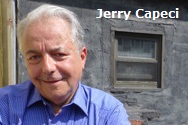
By Tom Robbins in Philadelphia, Miss.,
and Jerry Capeci in New York
UNDER secret orders from J. Edgar
Hoover, the FBI used a mob informant to kidnap and threaten a
Mississippi klansman until he coughed up the location of the
bodies of three civil rights workers who were brutally slain
outside the town of Philadelphia at the start of the Freedom
Summer of 1964.
Three law enforcement sources have confirmed that two of the
bureau's top New York City agents arranged to have Colombo
mobster Gregory Scarpa Sr. , at the time a secret and valued FBI
snitch, taken to Mississippi to confront the klansman in a
bizarre, illegal and ultimately successful no-holds-barred
meeting.
Scarpa, according to the sources, kidnapped the klansman and
-- armed with an FBI-supplied pistol -- put the gun in his mouth
and threatened to "blow his f-----g brains out" if he
didn't spill the beans.
The klansman, an otherwise respected appliance merchant,
pleaded for his life and ultimately yielded the information.
Within 72 hours, a team of FBI agents, using a dragline and
bulldozer, dug the decomposing bodies out of an earthen dam where
they had been buried under 17 feet of red Mississippi clay.
The discovery of the bodies, coupled with other information
provided by the terrified klansman, led the FBI to a ring of klan
conspirators. Seven men -- including the deputy sheriff of
Philadelphia, Miss., who had arrested Schwerner, Goodman and
Chaney for speeding hours before they disappeared -- were
convicted of violating their civil rights.
But the FBI has never revealed how -- after being stumped for
more than 40 days -- it finally learned the location of the
workers' bodies in the earthen dam six miles southwest of
Philadelphia.
Most residents of Philadelphia, a town of little more than
5,000, where cotton still grows and a flowering magnolia tree
still graces the courthouse square, believe a local informer
received a rumored FBI reward of $30,000.
"We always believed somebody got the money," Connie
Sampsell, Philadelphia Chamber of Commerce director, said last
week.
Former FBI Inspector Joseph Sullivan, who spearheaded the FBI
probe into the slayings, refused to say how the information was
obtained. But Sullivan labeled the account provided by The News'
sources "totally inaccurate."
However, a high-level federal official who said he knew of the
episode said: "It happened. Everyone's going to say, 'Nah,
it never happened,' but it did."
It was not the only time the government turned to gangland
figures for help: The CIA used Chicago mobster John Roselli in a
plot to kill Cuban leader Fidel Castro, and the armed forces
turned to Mafioso Charles (Lucky) Luciano for help against
Italian dictator Benito Mussolini in World War II.
Scarpa's control agent at the time, Anthony Villano, wrote in
his memoir "Brick Agent" that the FBI regularly
employed covert operations and included a camouflaged account of
Scarpa's trip to Philadelphia.
Scarpa's kidnapping caper involved numerous federal crimes,
including conspiracy and crossing state lines to commit a felony
-- things the agency would be unlikely to admit.
There is no disagreement that the FBI was in a tough spot in
late July 1964, in the midst of the most tumultuous period of
civil disobedience in the nation's history -- the nonviolent
battle for civil rights that swept the South. Goodman, Chaney and
Schwerner were feared dead and their bodies missing, and another
1,000 civil rights workers were pouring into Mississippi. Mocking
klan officials and Mississippi authorities were calling the
disappearances a hoax, perpetrated by civil rights activists.
President Lyndon Johnson wanted action.
According to the sources, Hoover's decision to use covert
means to break the case came after all other methods, including a
reward offer, had failed.
In an internal FBI memo cited in "We Are Not
Afraid," a 1988 book about the murders, a top bureau
official wrote: "The FBI is interested in but one thing at
this time and that is to find the victims...through an
intermediary or through any other imaginable means."
"The bureau was very embarrassed," one source told
The News. "Hoover ordered New York to get a wiseguy
informant to go with agents down there to do whatever they had to
do."
The story of the bizarre encounter between a wiseguy from
Brooklyn and a Mississippi klansman, according to the sources,
went like this:
Scarpa, then a rising mobster in the crime family of Joseph
Colombo, fancied himself a patriot and had been wooed into
becoming an FBI tipster. He was a logical choice.
He was a cowboy, an action guy
"He was a cowboy. He was an action guy," said a
former agent who had dealings with Scarpa in the 1960s.
Agreeing to the scheme, Scarpa and a girlfriend flew to Miami
and registered at the Fontainebleau Hotel to establish an alibi.
Scarpa then flew alone to New Orleans where he met the New York
agents who drove him to Philadelphia, in eastern Mississippi.
The merchant, identified by local agents as a possible weak
link in the klan operation, was pointed out to Scarpa, who said
he was new in town, put down a deposit on a television set, and
promised to be back by closing to pick it up.
When he returned, Scarpa asked the merchant to help him carry
the TV to his car. As they were hoisting it in, Scarpa slapped
the man over the head with a pipe, tied him up and threw him in
the trunk of the car, leaving the TV on the street.
Scarpa drove to a pre-arranged location, a shanty deep among
the tall loblolly pines where FBI agents were hidden outside.
Inside, Scarpa tied the klansman to a chair and demanded to know
"what happened to the three kids."
The klansman's initial story, relayed by Scarpa to the agents,
was phony, they told him. A second version was no better. The
third time, Scarpa asked one of the agents for his gun and went
back inside.
He later told them he stuck the gun barrel into the klansman's
mouth and told him: "Tell me the f-----g truth or I'll blow
your f-----g brains out."
The terrified merchant then gave up the location of the graves
and the names of the culprits. This last version, the agents
said, rang true.
Scarpa went back, loosened the ropes and warned the merchant
to wait before leaving. In a final warning, he put the gun back
into his mouth and said, "If we find out it's not true I'll
be back."
Scarpa returned to New York and continued a career combining
loansharking, hijacking, illegal weapons sales -- and providing
frequent information to the FBI.
Scarpa died June 8 in a Minnesota federal prison hospital of
AIDS, acquired during surgery in 1986 from tainted blood donated
by a member of his mob crew.
According to Philadelphia historian Florence Mars, The News'
description of the merchant kidnapped by Scarpa matches a man the
FBI took particular interest in during their investigation.
MARS, a fourth-generation member of a
prominent white Philadelphia family, opposed the klan and was
jailed because of her stand. In her book, "Witness at
Philadelphia," she wrote that the FBI "asked repeatedly
about the owner of an appliance shop, a man not associated with
goon activities." The merchant was "scared to
death" of being arrested and was later identified by the FBI
as secretary-treasurer of the Neshoba County klan, Mars said.
She said the merchant was never charged with any crimes but
she declined to identify him. " At this point, it just
doesn't matter," she said.
|